
A Beacon of Reform and Resolve: The Transformative Journey of Ake Ravi Krishna
In an era where governance is often measured in statistics and enforcement in severity, a rare narrative emerges from Andhra Pradesh—one that redefines policing not as an instrument of fear, but as a force of transformation. At the center of this story stands Ake Ravi Krishna, IPS, Inspector General of Police and the driving force behind the EAGLE (Elite Anti-Narcotics Group for Law Enforcement) Department—an officer whose life is as much about reforming society as it is about enforcing the law.
Roots of Purpose
Born and raised along the serene banks of the Godavari, Ravi Krishna’s early life was shaped by values that would later define his career—integrity, empathy, and an unwavering commitment to give back to society. Inspired deeply by his father during his formative years, he internalized a simple yet powerful principle: service to society is the highest calling. This philosophy did not remain an abstract ideal—it became the foundation upon which he built his journey to the Indian Police Service.
The Philosophy of “Gandhian Policing”
At the heart of his policing model lies a profound belief: “99% of society consists of law-abiding citizens; it is only the remaining 1% that requires monitoring.” This philosophy, which he terms Gandhian Policing, shifts the paradigm from control to connection. Under his leadership, the police force has evolved into a more approachable, humane institution—bridging the gap between authority and the public.
Rather than relying solely on punitive measures, Ravi Krishna emphasizes trust-building, community engagement, and preventive intervention. His approach has not only improved public confidence but has also reduced the alienation that often fuels crime.
Rewriting Destinies: From Streets to Stability
One of the most compelling examples of his reformative approach unfolded during a case investigation, where he encountered a group of vulnerable youth—many of them street children entangled in illegal activities and substance abuse. Instead of treating them as offenders, he saw them as individuals at a crossroads.
He initiated a structured intervention:
Segregating them based on their circumstances—addiction, lack of direction, or socio-economic distress
Providing targeted counselling
Facilitating their admission into schools, colleges, and de-addiction centers
The results were nothing short of transformative. Many of these individuals have since reintegrated into society, leading stable family lives. What could have been a lost generation became a living testament to the power of compassionate policing.
Chintapalli: A Model of Tribal Empowerment
In the remote tribal belts of Chintapalli (erstwhile Visakhapatnam district), Ravi Krishna scripted another remarkable chapter. In a region often overshadowed by socio-economic challenges, he introduced a bold experiment—turning police stations into centers of reform.
Tribal youth, once distanced from mainstream opportunities, began approaching the police voluntarily—not out of fear, but with hope. Recognizing this shift, he collaborated with corporate entities to:
Train and skill tribal youth
Prepare them for employment roles such as security personnel and support staff
Instill confidence and discipline through structured mentoring
His belief in the “self-sustaining cycle of reform” is evident here—once empowered, individuals become role models, inspiring others without the need for constant monitoring. In many instances, his personal involvement went beyond duty—offering shelter, guidance, and emotional support, treating these youth as members of his own extended family.
Transformative Service in Kappatralla
In Kappatralla village of Kurnool district, the service rendered by Ake Ravi Krishna stands as a model of visionary and people-centric policing. At a time when the village was deeply entrenched in factional conflicts and cycles of violence, he chose not merely to enforce law but to rebuild society from within. By instilling confidence among the youth and redirecting their energies towards education, he initiated structured mentoring programs, continuous counselling, and disciplined preparation strategies that eventually led to several young men and women securing government positions, particularly as teachers. Beyond education, he expanded his intervention into livelihood generation—promoting agricultural sustainability, facilitating the distribution of thousands of fruit-bearing saplings, supporting women through self-help groups, and enabling access to financial assistance. Infrastructure development, including community facilities and storage systems, further strengthened the village economy. His approach created a self-sustaining cycle of progress, where reformed individuals became role models for others, ultimately transforming Kappatralla from a faction-ridden settlement into a symbol of peace, productivity, and aspirational growth.
Simplicity Behind Authority
Despite holding a high-ranking position, Ravi Krishna remains remarkably grounded. His simplicity, accessibility, and genuine concern for people have earned him a rare distinction—he is not just respected, but deeply trusted. In every region he has served, communities have embraced him as a brother, mentor, and guide.
A Mind Sharpened by Chess
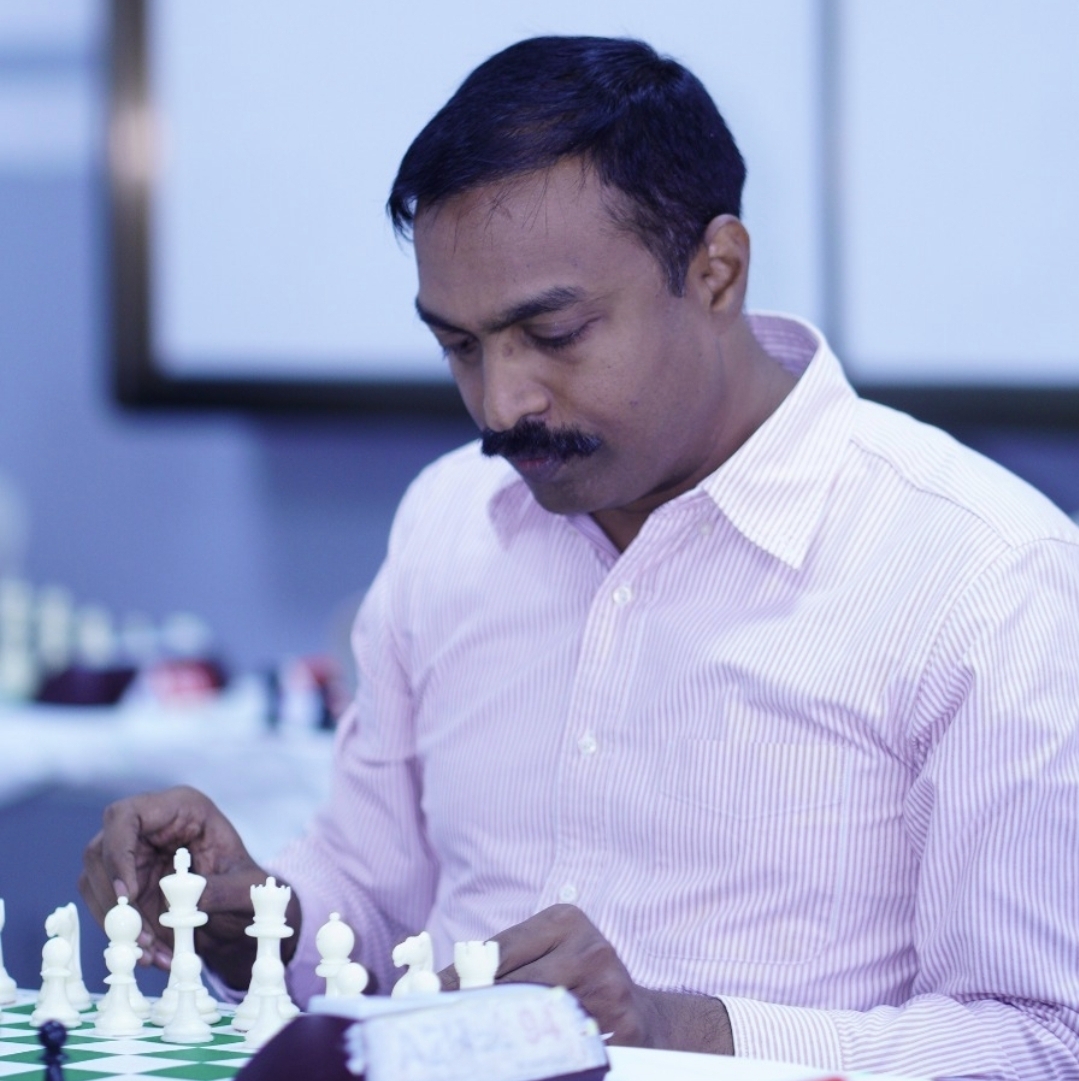
Beyond his demanding professional life lies another dimension of his personality—his passion for chess. Introduced to the game by his father, Ravi Krishna pursued it independently, leveraging modern learning tools to master the sport.
In a remarkable feat, he participated in his first-ever FIDE-rated international rapid chess tournament at Vijayawada (Scotspine International School, April 26). Competing against seasoned players, he defeated four internationally rated opponents and secured a FIDE rating exceeding 1600—an extraordinary achievement for a debutant.
He is widely regarded as:
The first individual from Andhra Pradesh to secure an international rating in his very first tournament
Possibly the first IPS officer from the state to achieve this distinction
Yet, what impressed observers most was not just his performance, but his demeanor. On the board, he was disciplined and analytical; off the board, he was humble—engaging with fellow players, discussing games, and reflecting on his own mistakes like any passionate learner.
For him, chess is more than a game:
“It refreshes my mind. Even a one-minute game helps me relieve stress and return to my duties with clarity and efficiency.”
Today, he stands as an inspiration for young minds—demonstrating how intellectual pursuits and professional excellence can coexist.
Leading the Fight Against Drugs
As the head of the EAGLE Department, Ravi Krishna shoulders a critical responsibility—combating drug abuse across Andhra Pradesh. True to his preventive philosophy, he focuses not just on enforcement but on awareness.
Recognizing the vast reach of the chess community—over 20,000 active players in the state—he has innovatively integrated anti-drug campaigns into tournaments. At a major gathering of over 1,500 participants, including players and parents, he initiated a large-scale anti-drug pledge, transforming a sporting event into a platform for social change.
He has actively collaborated with organizations like the Andhra Chess Association to:
Educate young players about the dangers of drug abuse
Instill discipline and awareness from an early age
Build a community-driven movement towards a drug-free society
The Larger Vision
Ravi Krishna’s journey reflects a rare synthesis of discipline, compassion, and vision. Whether reforming vulnerable youth, empowering tribal communities, excelling in intellectual pursuits, or leading statewide anti-drug initiatives, his work embodies a singular idea—that governance is most effective when it is humane.
He does not merely enforce the law; he transforms lives.
He does not just lead a department; he builds a movement.
In a world often searching for role models, Ake Ravi Krishna stands as a compelling reminder that true leadership lies not in authority, but in the ability to inspire change that endures.
KV/-